
In-depth Analysis of the Four Major Disease Groups in DRG 3.0 Rehabilitation Program - From "Clinical Spontaneous Movements" to "Independent Payment Entry Points", How Can the Rehabilitation Discipline Capitalize on This Structural Dividend?
"Rehabilitation payment 'independent era' officially begins"
On September 2, 2026, the National Healthcare Security Administration officially released the "3.0 version of the disease group (DRG) payment grouping plan" and the "3.0 version of the disease-specific scoring (DIP) payment grouping plan". This is the third systematic iteration after the 1.0 version in 2019 and the 2.0 version in 2024, marking a comprehensive shift from "expansion" to "improvement" in the reform of medical insurance payment methods.
For the rehabilitation discipline, the most significant change in this version can be summarized in one sentence: Among the four major diagnostic categories (MDCs) - the nervous system, respiratory system, cardiovascular system, and musculoskeletal system - each has an additional rehabilitation-specific ADRG group - BN1, EN1, FQ1, and IN1. This is the first time that the rehabilitation specialty has obtained an independent core grouping status since the implementation of DRG payment. Early rehabilitation has transformed from "spontaneous movements" in clinical practice to a "diagnostic process with an independent payment channel".This article is divided into two parts: the upper part interprets the key points of the policy and the impact on the departments; the lower part compares the intra-group surgical operation codes of the four disease groups and presents three configuration version plans, which can be used by the rehabilitation department as a reference for inventory and planning during the transition window period.
I. The foundation of DRG 3.0: A systematic iteration guided by the goal of "improving quality"
1. Grouping structure: DRG is refined, DIP is detailed
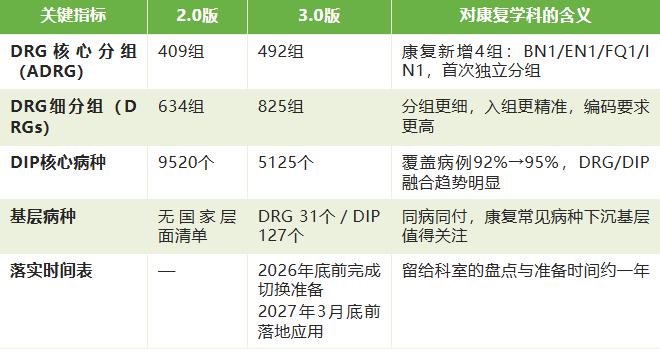
In version 3.0, the 26 major diagnostic categories (MDC) remained unchanged. The core group (ADRG) increased from 409 groups in version 2.0 to 492 groups, while the detailed groups (DRGs) increased from 634 groups to 825 groups. In terms of DIP, the national core disease database was adjusted from 9,520 core diseases in version 2.0 to 5,125, and the coverage rate of cases increased from 92% to 95% - "When it's more appropriate to be rough, then be rough; when it's more appropriate to be detailed, then be detailed". The grouping granularity is closer to clinical reality.
Apart from the addition of 4 groups for rehabilitation disciplines and 2 groups for pain disciplines, version 3.0 also subdivided cases under the age of 6 and those 70 years old or above (accounting for about one-tenth of all DRG groups), grouped robot-assisted surgeries separately, and significantly reduced the list of comorbidities/complications (serious complications were reduced by nearly 3,000 and general complications by over 1,500).
2. Supporting Mechanisms: Three matters are directly related to the operation of the departments
First, the "performance firewall". In version 3.0, it is clearly stated that medical institutions are not allowed to use the payment standards for disease types as the limit for assessing departments or medical staff, or to link it with performance distribution indicators - there will no longer be institutional concerns regarding the "more done, more rewarded" system in the early rehabilitation process.
Second, the retention of surpluses and sharing of reasonable overruns. Surplus funds from payment based on disease types can be used as the business income of the medical institution; reasonable overruns caused by major policy adjustments or other factors will be shared by the medical insurance fund and the medical institution in accordance with the prescribed proportion.
Third, the special case single-discussion mechanism. In the coordinated regions that implement DRG payment, the number of special cases for single discussion should generally not exceed 5% of the total discharged cases of DRG; it is encouraged to conduct monthly or quarterly reviews, or online double-blind reviews. High-cost complex cases such as long-term coma recovery and multi-system complications treated by the rehabilitation department can obtain reasonable compensation through this channel.
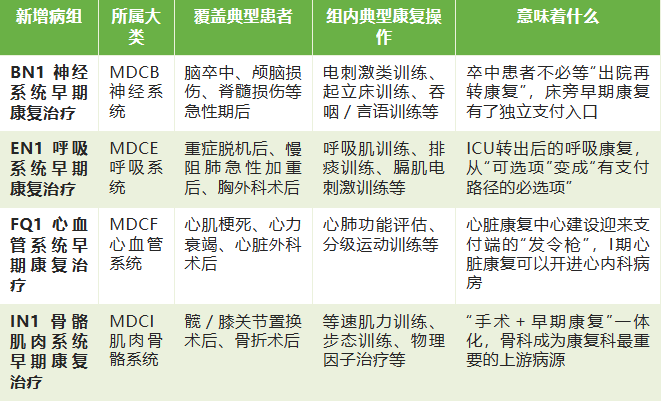
Note: The disease group coding and group connotation are based on the 3.0 version of the grouping scheme. The specific implementation shall follow the official plan attached to the document issued by the National Medical Insurance Administration.
To understand this table, two key words should be grasped:
One is "early". All four disease groups point to early rehabilitation - the intervention timing is moved forward to the bedside during the acute phase, and the battlefield of rehabilitation extends from the rehabilitation department to the ICU, stroke center, cardiology department, and orthopedic ward.
The other is "four systems". Nervous, respiratory, cardiovascular, and musculoskeletal - these precisely cover the four clinical lines with the largest service volume in rehabilitation medicine. This is not a symbolic "giving rehabilitation a place", but embedding rehabilitation into the main process of disease diagnosis and treatment.
III. Five Direct Impacts on the Rehabilitation Department
1. Payment has changed: From "cost items for bed days" to "income-generating treatment processes"
The rehabilitation services have been divided into an independent payment unit. Conducting early rehabilitation is no longer just about "helping clinical departments save bed days", but directly generating compliant income. With the addition of "performance decoupling" and "surplus retention" as supporting measures, the economic account of the department for conducting early rehabilitation has been calculated and settled for the first time, making it balanced and clear.
2. Patient source has changed: The bedside is the entry point
BN1/EN1/FQ1/IN1 belong to four MDCs respectively, meaning that the entry point of the rehabilitation department has moved to the bedside of the sister departments. Whoever establishes the bedside rehabilitation collaboration process with neurology, respiratory and critical care, cardiology, and orthopedics first will get this batch of structural patient sources first.
3. Capability has changed: From "being able to perform treatment" to "being able to conduct early rehabilitation"
The group's operations are highly dependent on standardized assessment and training equipment - electrical stimulation, standing beds, weight reduction gait training, swallowing and speech training, cardiopulmonary assessment training, etc., almost forming a list of early rehabilitation equipment. The equipment and talent shortages will directly determine whether the department can handle these four disease groups (equipment plans are detailed in the fourth part).
4. Coding has changed: Rehabilitation operations must be "recorded in the medical record"
After version 3.0, whether rehabilitation operations can be correctly coded and independently filled out directly determines whether the case can be included in the rehabilitation disease group. The quality of the medical record cover page and coding ability have been linked to the rehabilitation department's income for the first time - the rehabilitation treatment records, assessment scales, and operation coding standardization are worth each department's early planning.
5. Backstop mechanism: Special cases are discussed separately to leave a channel for complex cases
For difficult and complex rehabilitation cases with costs exceeding the payment standard, the number of special case discussions does not exceed 5% of the total discharged cases of DRG, and is reviewed on a monthly/quarterly basis and conducted in an online double-blind manner. Cases such as long-term coma awakening and multi-system complications can obtain reasonable compensation through this mechanism.
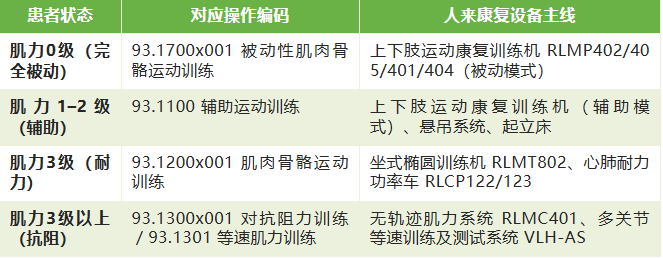
A single equipment line covers the entire recovery arc of the patient from a coma-induced bed rest to walking independently - this is precisely the equipmentological meaning of "early rehabilitation".
Surgical operations within the four major disease groups
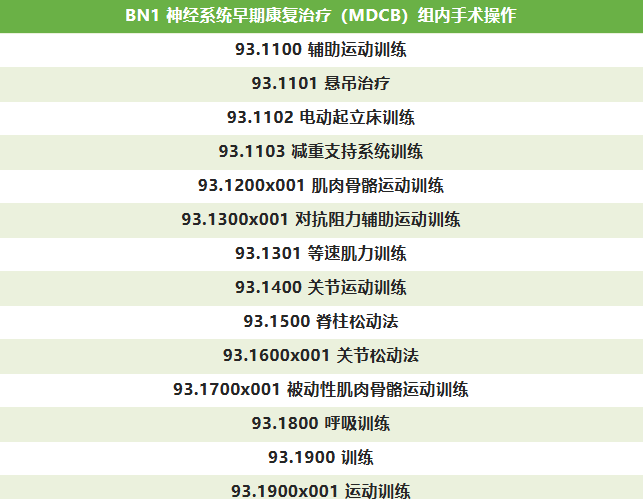
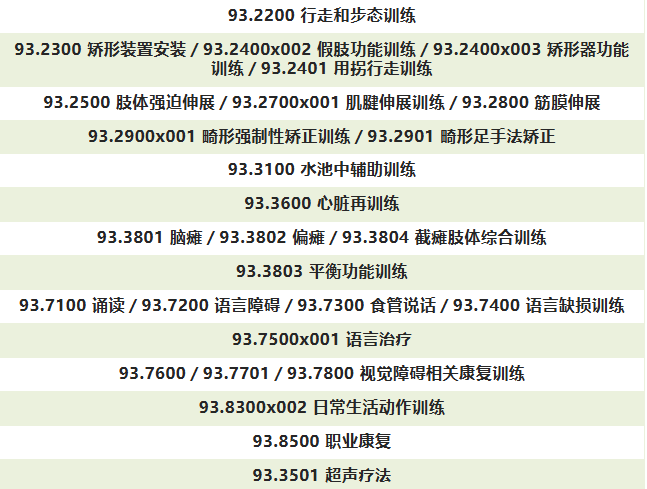
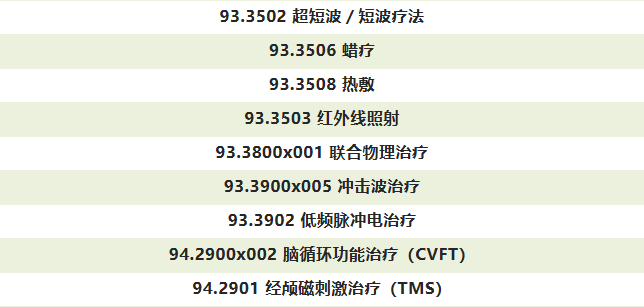
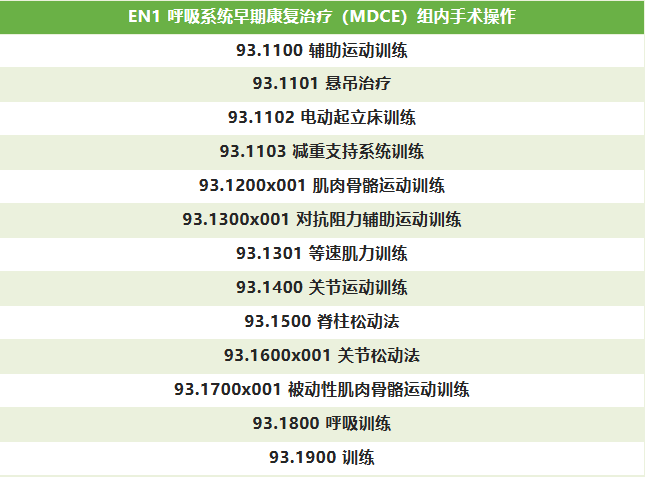
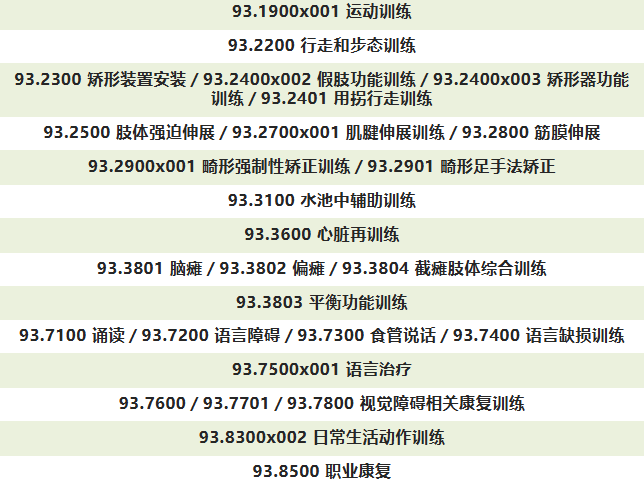

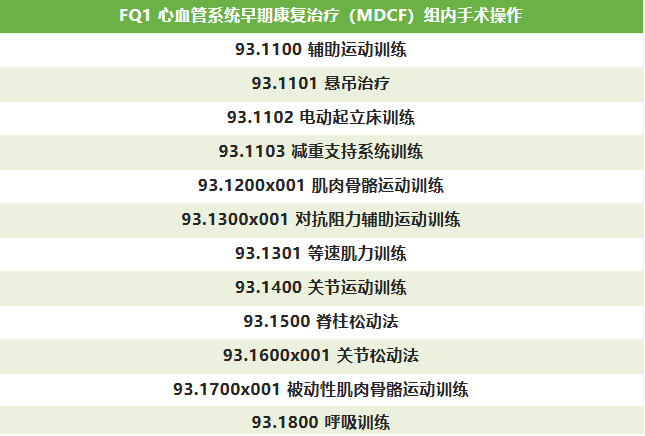
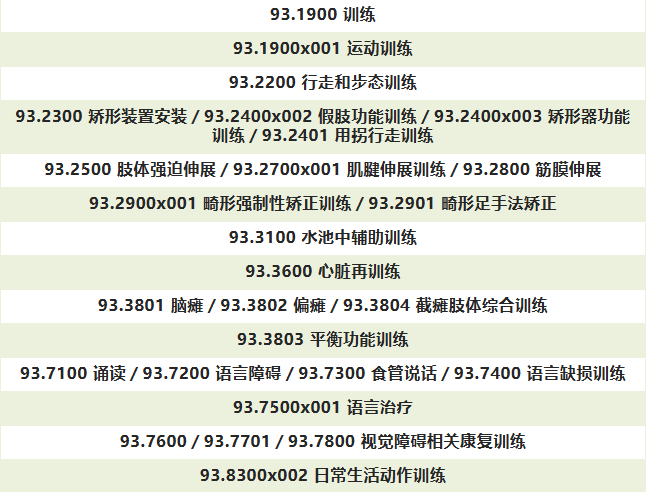

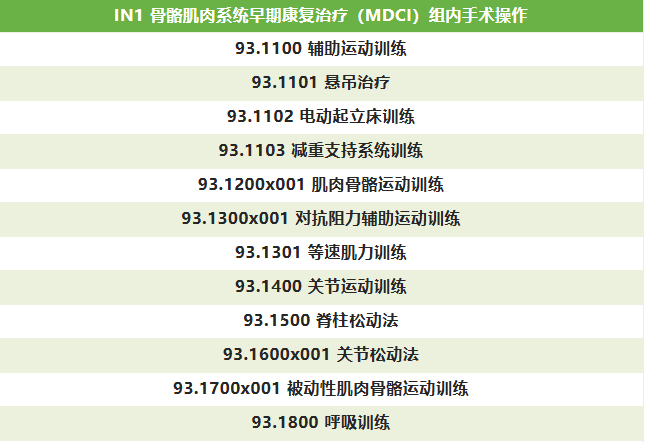
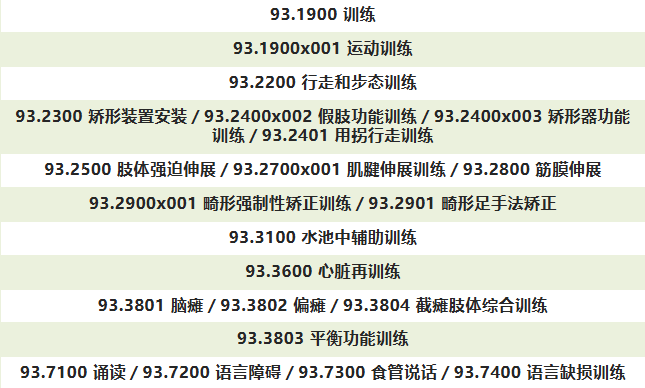
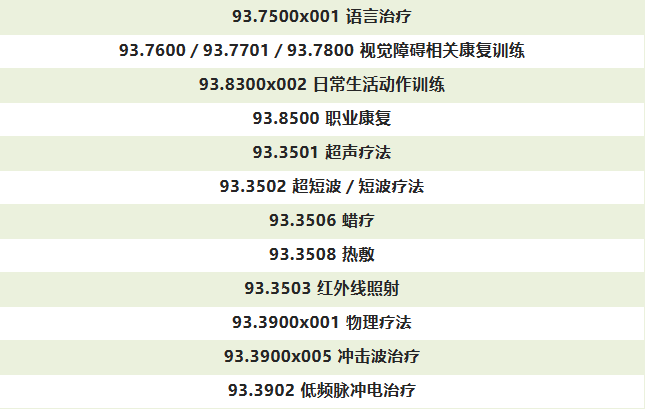
Three-level configuration versions recommended
Based on the common requirements of the four disease groups and the differentiated items of each group, Human Rehabilitation has provided three configuration versions for different budget and development positioning departments to choose from:
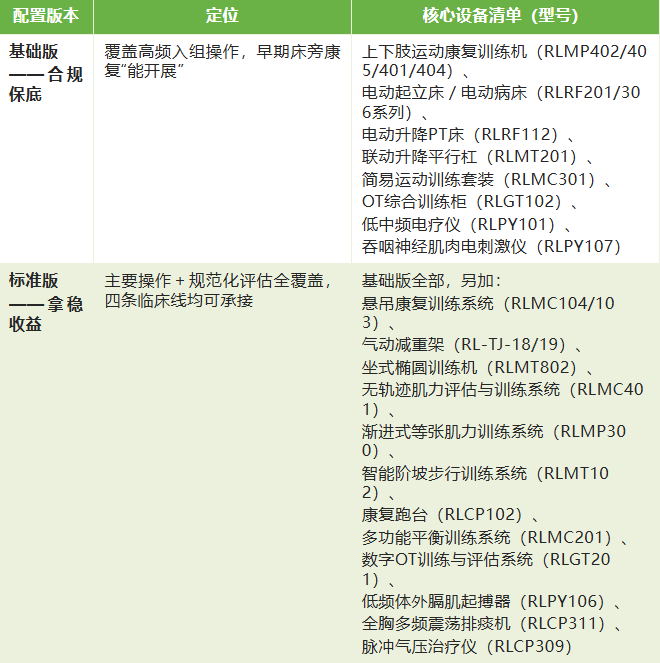
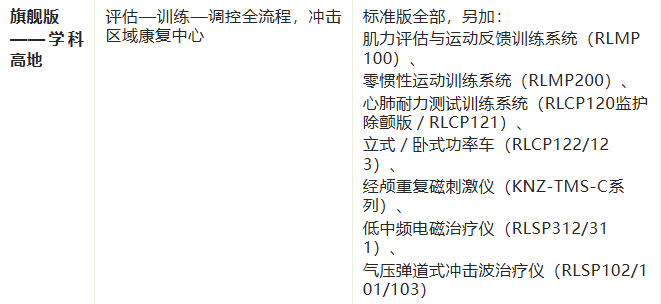
V. Three Action Suggestions for the Rehabilitation Department
1. Inventory of Equipment and Processes
Compare the intra-group operations of the four disease groups with the list in the fourth part of this article, and conduct a detailed inventory of the existing equipment in the department: tick the covered items and list the missing ones in the procurement plan for 2026-2027 in the order of "basic version → standard version → flagship version", and simultaneously plan the bedside rehabilitation workflow and staff scheduling.
2. Establish a Collaborative Pathway
Actively establish bedside rehabilitation referral mechanisms and joint ward rounds with the departments of Neurology, Respiratory and Critical Care Medicine, Cardiology, and Orthopedics. Transform "waiting for the patient to be discharged" into "going to the bedside" - the disease source entry points of the four disease groups are right in the wards of the partner departments.
3. Focus on Local Details
Each province will successively release provincial group plans and settlement details for the coordinated area. The weight of disease groups, the proportion of special cases for individual discussion, and the scope of grassroots diseases will be based on the notifications from the local medical insurance department. It is recommended to designate a specific person to follow up and calibrate the operational standards of the department in the first instance.
Policy sets the direction, configuration ensures implementation, and efficacy builds reputation.
As a national high-tech enterprise and a specialized, innovative enterprise deeply engaged in rehabilitation equipment, Renre Rehabilitation has taken "ICF International Functional Classification" as the core standard for product development, constructed six product series including rehabilitation furniture, motion control, muscle function, mobility function, physical factors, and functional assessment, and took the lead in laying out innovative scenarios such as brain-computer interface smart wards. We will continue to track the latest progress of the implementation of DRG/DIP 3.0 in each province, and together with all rehabilitation professionals across the country, welcome the "independent era" of rehabilitation payment.
(This article is a policy interpretation and equipment configuration suggestion. The specific implementation standards should be based on the detailed implementation rules issued by the local medical insurance department and the attachment of the group plan officially released by the National Medical Insurance Administration.)